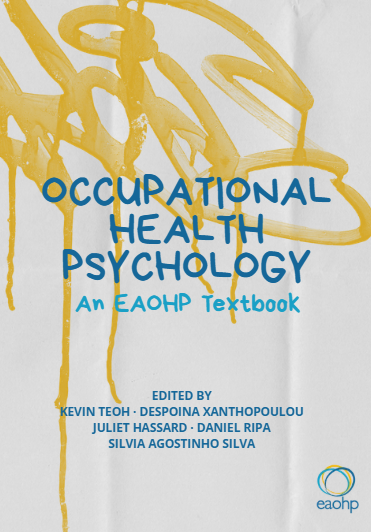
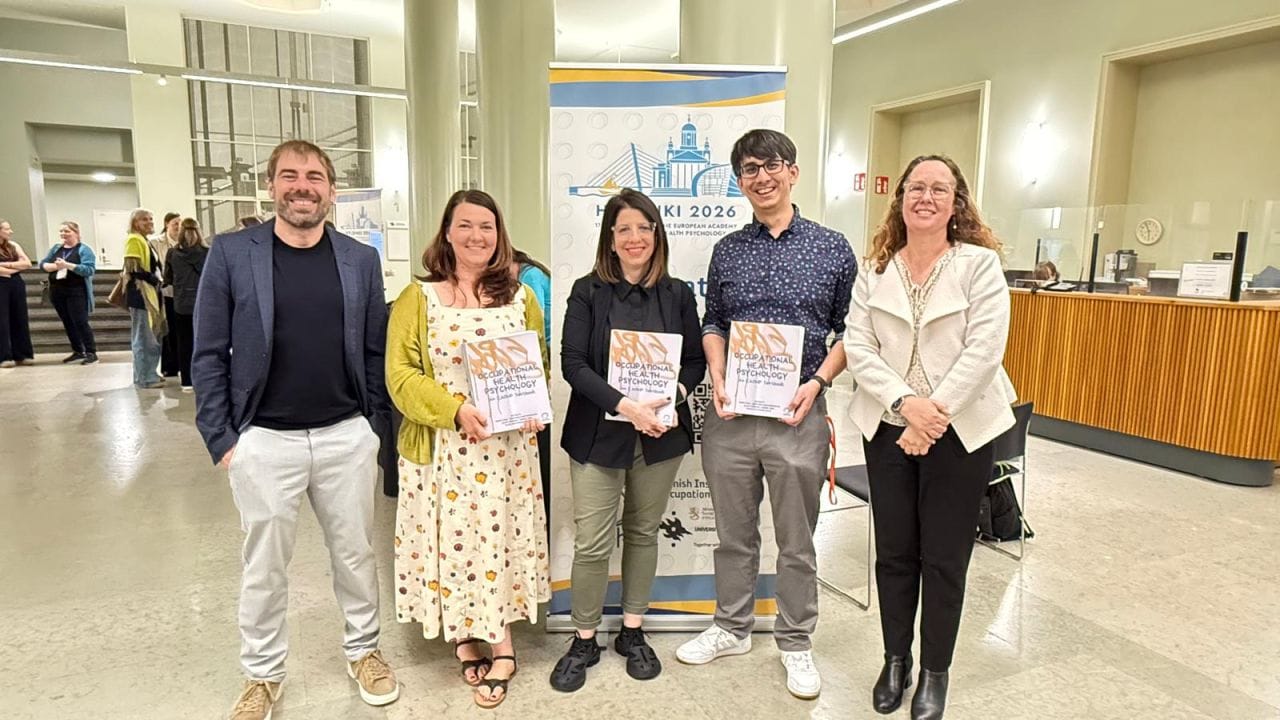
During the 17th European Academy of Occupational Health Psychology (EAOHP) Conference, the global release of the textbook: Occupational Health Psychology: An EAOHP Textbook. As the first official educational volume completely curated and published under the banner of the Academy, the textbook represents a massive step forward in standardising OHP curriculum globally.
Occupational Health Psychology is the scientific discipline dedicated to understanding how the characteristics of work and the work environment, and their interplay with the macro-level social, economic, political, technological and ecological context, determine workers’ health, safety and wellbeing, and therefore organisational and societal prosperity and sustainability. By synthesising theory, research, policy and practice, the textbook aims to establish a common foundation of knowledge for students, researchers and practitioners, supporting the standardisation of OHP education, and seeks to stimulate further research by highlighting gaps in understanding and identifying areas for future investigation.
Every chapter is authored by experts in their respective fields who provide a balanced perspective across three essential pillars of (i) research; (ii) practice; and (iii) policy. In doing so, the textbook seeks to equip readers with the theoretical knowledge and understanding of how to translate that evidence into persuasive rationales for organisational and societal change.
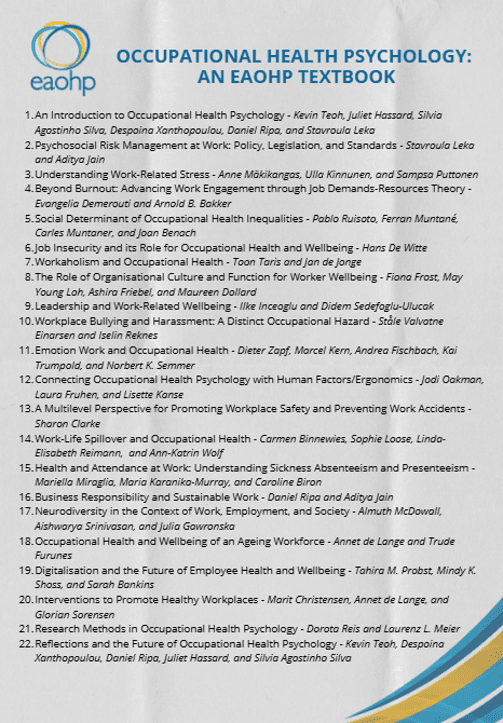
The textbook is organised across 22 chapters, mapping the history of Occupational Health Psychology and detailing the international policies, macro-level legislations, and safety standards that govern modern work environments. From there, the textbook examines the distinct psychological mechanisms of the workplace experience. These include systemic factors like socio-economic inequalities and job insecurity, individual dynamics like workaholism and high-demand stress, and the critical protective role of robust workplace engagement and supportive organisational factors. Subsequent chapters, highlight the systemic influence of strategic leadership, bullying, work-life boundaries, and health-related absenteeism. Crucially, the textbook addresses the evolving landscape of 21st-century employment, dedicating vital focus to corporate accountability, neurodiversity inclusion, the needs of an ageing demographic, and the digital transformation of modern work. The textbook concludes with an overview of rigorous modern research methodologies and interventions.
The textbook is widely available in both digital and print layouts. EAOHP Conference attendees in Helsinki and EAOHP members will have access to a free ebook. More information on the book and access is available here.